


World’s Richest Man Steps Up Giving Despite Wariness About Charity.
It doesn’t take Carlos Slim Helú long to voice his discontent with philanthropy. Mr. Slim, a Mexican businessman who by some estimates is the richest person in the world, is sitting in an office at Grupo Financiero Inbursa, a bank that makes up one piece of his corporate empire. The room is hardly ornate, particularly for someone of Mr. Slim’s net worth, which Forbes estimates to be about $69-billion. His Malcolm S. Forbes Lifetime Achievement Award, given to “heroes of entrepreneurial capitalism,” hangs on one wall.
Mr. Slim certainly has the resources to be a hero of the nonprofit world. But that has never been his precise ambition.
As the 72-year-old rose through the ranks of the world’s billionaires, he stepped up his giving, too, contributing, by a spokesman’s count, $4-billion since 2006 to a foundation that bears his name. He started an institute devoted to health in Latin America in addition to expanding the work of his telecommunications company’s Telmex Foundation, which since 1996 has supported an array of education, health, and sports projects.
A Nonprofit Skeptic
In the last half-dozen years, Mr. Slim’s organizations have begun making eight-figure pledges to the likes of the Broad Institute and the World Wildlife Fund and working with the William J. Clinton Foundation and the Bill & Melinda Gates Foundation on projects to fight poverty in Latin America and improve health care for Central America and Southern Mexico’s poorest.
But Mr. Slim, who says he stepped down a few years ago from day-to-day management of his companies in part to focus on foundation work, has often voiced skepticism about philanthropy.
That has frustrated some people in the nonprofit world, who say his giving lacks transparency, amounts to only a small fraction of his wealth, and has yet to produce the results to which the telecommunications, retail, and banking mogul says he aspires.
And on this spring afternoon, he seems more interested in playing philanthropy provocateur than advocate.
“We have seen donations for 100 years,” says Mr. Slim. “We have seen thousands of people working in nonprofits, and the problems and poverty are bigger. They have not solved anything.”
Hands-On Approach
He paints his approach as a hands-on alternative to other forms of philanthropy, with a focus on results and “teaching a man to fish” as opposed to breeding dependency. He wants to alleviate poverty in Mexico and abroad, he says, through his businesses but also by investing in health and education programs that build “human capital.”
That’s why his health institute has supported projects aimed at newborns, he says, to start children on a path to success. And that idea is behind the Telmex Foundation’s support of efforts to teach Mexicans computer skills and cover the costs of elective surgeries for disabled workers.
Mr. Slim declines to specify plans for future giving, saying that his and other business executives’ contributions of time, perhaps more than their money, could have a greater impact. In 2007, he said he would increase his foundations’ assets to $10-billion within four years, a target he hasn’t yet met.
Mr. Slim also emphasizes the opportunities to produce social benefits through profit-making enterprises, an approach he says is more enduring than charity. He has revitalized a downtown neighborhood of Mexico City, for example, by opening businesses and by financing social programs through revenues from a parking lot he owns.
“I don’t like to talk about giving away money,” he says. “That’s not our purpose. Our purpose is to solve social problems.”
Help With Strategy
Despite his wariness of charity, Mr. Slim has created a collection of nonprofits whose missions are nearly as diverse as the companies he controls.
His Telmex Foundation supports stipends for university students, bicycles for rural schoolchildren, and surgeries for needy Mexicans, along with sports teams and natural-disaster response. It also finances an institute devoted to teaching computer skills and expanding Internet access.
Mr. Slim also owns a bail-bond company that posts the bail for poor people accused of petty crimes, some 93,000 since the late 1980s.
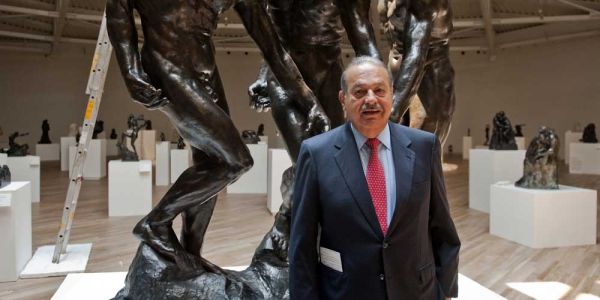
Through his health institute, he is exploring ways that cellphones can monitor the medical condition of vulnerable pregnant women. He supports efforts to improve Mexico’s organ-transplant system. Last year, he opened a new museum to house his $100-million art collection.
“He has extraordinarily broad interests—in science, engineering, anthropology, medicine, public welfare,” says Eric Lander, who leads the Broad Institute, in Boston, which received a $65-million pledge from Mr. Slim’s health institute to explore the genomic factors that lead to cancer and diabetes.
Nonprofit leaders who’ve worked with Mr. Slim say his dislike for simply throwing money at problems makes him a demanding, passionate supporter who is committed to putting his energy into helping them strategize.
Omar Vidal, director general of the World Wildlife Fund’s Mexico affiliate, says Mr. Slim regularly calls him in the evenings to check up on his foundation’s $50-million pledge to conserve six regions of Mexico. (See Page 19). “He is not someone who will give you money not knowing what it will do,” says Mr. Vidal.
Hard to See Results
Yet some nonprofit leaders in Mexico say Mr. Slim’s efforts aren’t adding up to nearly as much as they could. They worry that his focus on his own nonprofit organizations, and on for-profit ways to tackle social issues, is driven by stinginess and a lack of sophistication about the breadth of nonprofit work.
His foundation’s annual reports list the number of bicycles and eyeglasses donated or surgeries for which he’s covered some costs, but they don’t provide an accounting of finances or impact, says Mónica Tapia, who leads Alternativas Y Capacidades, a Mexican nonprofit devoted to encouraging local philanthropy.
She and others lament that most of his money appears to go to his own organizations and that his foundations don’t seem to have any kind of clear application process.
Financial information the Carlos Slim Foundation provided to the Mexican government in 2010 shows assets of roughly $2.7-billion, with just $2.6-million spent on programs and $1.1-million donated to other groups. In 2007, the foundation gave roughly $280-million, nearly all of it to establish Mr. Slim’s health institute.
Christopher Martin, a former Ford Foundation employee who now works as an education consultant in Mexico, says Mr. Slim has identified some of the right priorities in his education work, like promoting Internet access and early-childhood education. His giving also seems to be reaching many people: More than 240,000 students have received stipends from the Telmex fund since 1997, the foundation says.
But while those numbers are impressive, Mr. Martin says it’s hard to assess whether Mr. Slim’s education work makes a big difference.
“There’s a lack of clarity about their policies and how to work with them,” says Mr. Martin. “He’s not open-minded and collaborative enough.”
Mr. Slim’s reliance on broadband and cellphones in his education and health projects also gives rise to concerns that he’s trying to expand business for his telecommunications company. But Roberto Tapia, who leads Mr. Slim’s health institute, says technology combines promising ways to promote access to health care with the organizations’ expertise.
“It’s not because there’s an element of marketing,” he says. “Technology is really the strength and force to reduce the gap in health inequities.”
Cultural Differences
Yet even Mr. Slim’s critics note that Mexico doesn’t have the same philanthropic tradition as the United States. Large-scale giving is new, charity has tended to be informal, and it’s only in the last five years that the Mexican government has required nonprofits to disclose information on their finances.
Also, philanthropy has sometimes been viewed in Mexico as a form of tax evasion; Mr. Slim’s son-in-law Arturo Elias Ayub, head of the Telmex Foundation, is quick to point out that Mr. Slim’s contributions to his private foundation have already been taxed.
Still, Michael Layton, director of the philanthropy and civil-society project at the Autonomous Technological Institute of Mexico, says: “It seems to me [Mr. Slim] doesn’t understand the powerful potential that philanthropy has to effect specific, targeted social change. He’s giving away enough money to have some positive press and be taken seriously by people but not enough to really make a difference in the way that someone like [Bill] Gates is making a difference.”
Mr. Slim has no patience for critics.
“What are they doing?” he says. “They don’t need money to do things.”
Sitting in the Inbursa office, he moves a finger down a list of universities where students who receive stipends from the Telmex Foundation are studying. “How many more do they want?”
Early Generosity
Mr. Slim, the reluctant philanthropist, is one of six children of a Lebanese-born businessman. He trained as an engineer and says that as a student he donated his teaching stipend from the university to students with less money. But he shrugs off a suggestion that this gesture was the start of his giving.
After school, he went into business and had, by the mid-1980s, acquired companies including Grupo Sanborns, a prominent retail chain, the hotel company Bimex, and the Mexican branch of the tire company Firestone, as well as shares in aluminum, cigarette, cotton, and mining companies.
In 1986, he started what is today the Carlos Slim Foundation, which until 2007 worked in relative quiet. Mr. Slim, a widower who is said to live modestly for someone of his wealth, says he did so because he felt a sense of “social responsibility.”
In 1990, when the Mexican government started privatizing national industries, Mr. Slim bought Telmex, the phone company. Today the company and its corporate parent, America Movil, which was initially a mobile-phone spin-off of Telmex, control about 70 percent of Mexico’s mobile market and 80 percent of landlines.
Those companies have brought Mr. Slim vast wealth but also criticism from government officials and others who say he’s a virtual monopolist who overcharges his customers and depresses Mexico’s economic growth.
Mr. Slim strenuously denies these sorts of criticisms, although he recently agreed to make changes to his business practices to avoid a nearly $1-billion fine from Mexico’s government.
‘Give of Yourself’
To illuminate his views on philanthropy, Mr. Slim is fond of turning to Khalil Gibran, the Lebanese-American writer and poet.
On this spring afternoon, he reads from Mr. Gibran’s work. “You give but little when you give of your possessions,” says Mr. Slim. “It is when you give of yourself that you truly give.”
His message: It’s easy for rich people to write checks. (They don’t even write the checks themselves, he jokes. They have an employee do it for them.) What’s more difficult, and more important, he says, is putting one’s time and energy into solving social problems.
Mr. Slim declines to give an estimate of how much time he’s putting into the work. “I don’t check the time,” he says. He taps his head: “It’s thinking.”
From Skeptic to Biggest Donor of World Wildlife Fund
By Caroline Preston
Mexico City
When Julia Carabias Lillo, Mexico’s former environment minister, first approached Carlos Slim Helú in the late 1990s to enlist his help protecting the country’s environment, the billionaire businessman seemed unconvinced of the strategies she proposed.
But a dozen years later, Mr. Slim is the biggest backer of the World Wildlife Fund’s Mexico affiliate, on whose board Ms. Carabias serves. In 2009, his Carlos Slim Foundation pledged $50-million for an ambitious plan to conserve six regions of Mexico, an effort that World Wildlife employees say he is actively involved in helping to shape and carry out.
So what changed?
“He got trapped by nature,” says Ms. Carabias.
Monarch Butterflies
A longtime supporter of health and education causes through his telecommunications company’s Telmex Foundation, Mr. Slim seemed less interested in environmental protection when Ms. Carabias first approached him, she says.
But after a few U.S. foundations became involved in preserving one of Mexico’s environmental gems, a monarch-butterfly sanctuary under threat from illegal logging, Telmex contributed some trucks to help a government environmental investigative agency monitor the forests.
Then Omar Vidal, who leads the World Wildlife Fund’s Mexico office, began to talk with Héctor Slim Seade, Mr. Slim’s nephew and an executive at Telmex, about other ways to help. The conversations resulted in a pledge of $500,000 from the Telmex Foundation for the nonprofit’s work in the butterfly reserve.
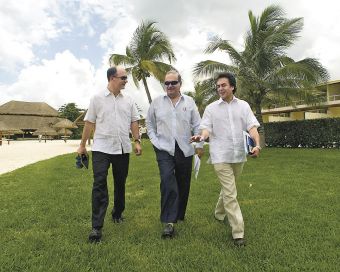
In 2005, Mr. Vidal invited Héctor Slim on an overnight trip to the preserve. Mr. Vidal recalls the shocked look on the hotel owner’s face when Héctor Slim showed up with an unexpected guest: his Uncle Carlos. Mr. Vidal says that the next morning, standing amid the bright orange butterflies, “I got a different glimpse of Carlos Slim.”
Other trips for Carlos Slim followed, some accompanied by Carter Roberts, World Wildlife’s president. Mr. Roberts recalls standing by Mr. Slim when a blue whale surfaced alongside their boat in the Gulf of California. Later, Mr. Slim suggested the charity feature that species of whale on its promotional materials.
By 2009, after long conversations with Mexico’s government and local environmental leaders, the World Wildlife Fund came up with a plan for a seven-year effort involving local communities, nonprofits small and large, and the government that could turn the country into a model for conservation. Mr. Slim agreed to give $50-million—on the condition that the nonprofits raise another $50-million in matching money.
Strong Opinions
Three years into the project, Mr. Vidal says he has talked with Mr. Slim perhaps 35 times about its progress. Mr. Slim is a results-oriented donor who is fond of describing how philanthropy doesn’t always achieve its objectives. Sitting in his sun-filled Mexico City office, Mr. Vidal flips through a thick white binder to show the charts he shares with Mr. Slim during their meetings.
Mr. Vidal says that Mr. Slim, with his business mind, has encouraged the World Wildlife Fund to consider more closely the economic dimensions of its work. He nudged the organization to move faster in helping indigenous people near the butterfly haven give up logging in favor of work in tree nurseries, ecotourism, and other ways to earn a living. Today, Mr. Vidal says, the rate of logging has dropped to less than 1 hectare per year compared with 460 in 2006.
But Mr. Slim’s hands-on style doesn’t always make him easy to work with. Raising $50-million in matching money is proving difficult: So far, the World Wildlife and the local environmental groups it works with have raised about $13-million.
Mr. Slim also has strong opinions, and his focus on short-term, measurable results sometimes clashes with the realities of environmental protection, say World Wildlife employees.
“He likes for things to happen quickly, and conservation does not happen quickly,” says Mr. Vidal.
But World Wildlife staff say Mr. Slim can be convinced to change his views.
He initially stipulated that the $50-million go entirely to conservation work, not to helping the nonprofits cover their administrative costs. But that requirement placed many of the 37 local environmental groups in a financial bind.
After a discussion, Mr. Slim agreed to allow the nonprofits to spend 8 percent of the money on administration.
“He understood that very clearly,” says Ms. Carabias.
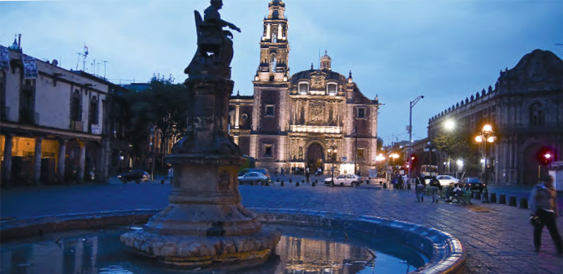
Mexican Mogul’s Giving Helps Revitalize Capital City’s Historic Downtown Neighborhood
October 4, 2012.
By Caroline Preston
Mexico City
Adrián Pandal weaves among pedestrians on a busy downtown street in this city’s historic center one recent Tuesday, stopping occasionally to point out landmarks like a new restaurant within a refurbished 18th-century palace, a church with a new sound system, and apartments rising from once-deserted buildings.
Mr. Pandal runs a preservation group financed by Carlos Slim Helú, the Mexican billionaire. His group’s efforts to revitalize the neighborhood, which was largely abandoned after a 1985 earthquake, exemplifies Mr. Slim’s approach to solving social problems. Skeptical of whether charities can make a big difference, Mr. Slim says he prefers to find ways to produce positive results while also turning a profit.
A previous attempt to restore Mexico City’s downtown failed, says Mr. Pandal, because it relied on new museums to attract business and foot traffic. When the city’s mayor asked Mr. Slim in 2000 to help revitalize the area, he instead focused on opening stores like Sanborns, the restaurant and retail chain he owns. He also bought apartment buildings and fixed them up for his employees and for local artists.
“You have to make it living,” says Mr. Slim, in describing the revitalization effort.
Focus on Profits
His preservation group also started counseling and health programs for neighborhood residents—but paid for them, to the tune of up to $5-million a year, not with grants but with revenue from a parking lot he purchased.
Mr. Slim, who is now working on a similar urban revitalization effort in Acapulco, says that there is “so much” in the way of programs to solve social problems that can simultaneously “be profitable.” Such programs could include not just infrastructure projects, he says, but also bank loans for the poor.
Finding ways for programs to sustain themselves also means that his money isn’t wasted on fundraising costs, for which Mr. Slim expresses distaste. “It’s a business,” he says, of the fundraising profession.

Carlos Slim’s Philanthropic Organizations: a Sampling

Carlos Slim Foundation
A private grant maker that supports projects in education, health, the environment, and other areas. In 2010, the last year for which tax information is available, it held roughly $2.7-billion, according to public filings with the Mexican government. Today the foundation says it has $3.5-billion.
Key grantees: The ALAS Foundation, an education group run by the pop star Shakira; Connect2Compete, a U.S. nonprofit dedicated to expanding access to computers and the Internet; the World Wildlife Fund; and an art museum and a health institute created by Mr. Slim. It also works with the William J. Clinton Foundation to help small businesses in Colombia and Haiti, among other projects.
Telmex Foundation
This grant maker, financed by Mr. Slim’s telecommunications company, runs education, health, and sports programs in Latin America. The foundation says it has $1.5-billion in assets.
Accomplishments: From 1997 to 2010, the foundation says it provided computers and monthly living stipends to 242,362 university students, donated 266,864 bicycles for children who live far from school, and subsidized the costs of 711,242 surgeries, among other accomplishments.
Key projects: It supports the Telmex Institute of Technology, which is devoted to teaching Mexicans technology skills and expanding online access. In the last two years, it has helped 3,500 schools secure computers and discounted Internet service, trained teachers at 850 schools in computer skills, set up 13 after-school centers, and provided advanced-degree programs in technology.
Carlos Slim Health Institute
Started in 2007 with a gift of roughly $280-million from the Slim foundation, this organization is dedicated to ensuring that more people in Mexico and abroad have access to quality health care. Much of its work focuses on using technology to improve care. It also supports efforts to improve Mexico’s organ-transplant system.
Key project: A $50-million effort with the Bill & Melinda Gates Foundation to improve health for Latin America’s poorest people.
Key grantee: A $65-million pledge to the Broad Institute for research into genetic factors that may lead to cancer and diabetes.
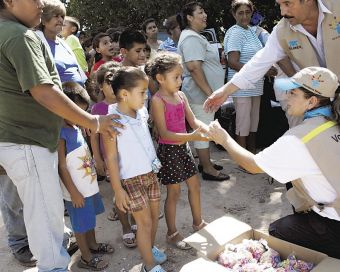
Fundación del Centro Histórico
The nonprofit, whose roughly $4-million annual budget is paid for by revenue from a parking lot that Mr. Slim owns, is dedicated to preserving Mexico City’s historic downtown. Mr. Slim has focused on revitalizing the downtown area by opening branches of his businesses, like the retail store Sanborns, and providing health and counseling services for neighborhood residents.
Museo Soumaya
Opened last year, this Mexico City art museum, which holds Mr. Slim’s $100-million collection of pieces by Auguste Rodin, Salvador Dali, and many other artists, is free to the public.